The Real Bottleneck in YouTube Operations
YouTube operations rarely break because typing a title is difficult. They break because the work is fragmented. OAuth lives in one flow, channel sync in another, transcripts in a separate storage layer, and AI prompt work in copied notes or chat windows. The operator ends up holding the whole process together manually.
That is manageable for a tiny channel. It becomes expensive once the channel has enough videos, publishing cadence, brand rules, or review needs that the operator starts spending more time staging the work than deciding what should actually change.
Why a Shared Console Matters More Than Another Prompt
The usual “AI for YouTube” story focuses on title generation or description ideas. That is not wrong, but it points at the wrong layer. The real gain comes from giving the AI a governed operating surface. If the system already knows the video, the channel, the transcript, the prompt template, and the review destination, the AI output gets much more useful.
Without that system context, the operator is stuck copying data into prompts, moving drafts between tools, and recreating the same review path over and over.
What the YouTube Operations Console Should Own
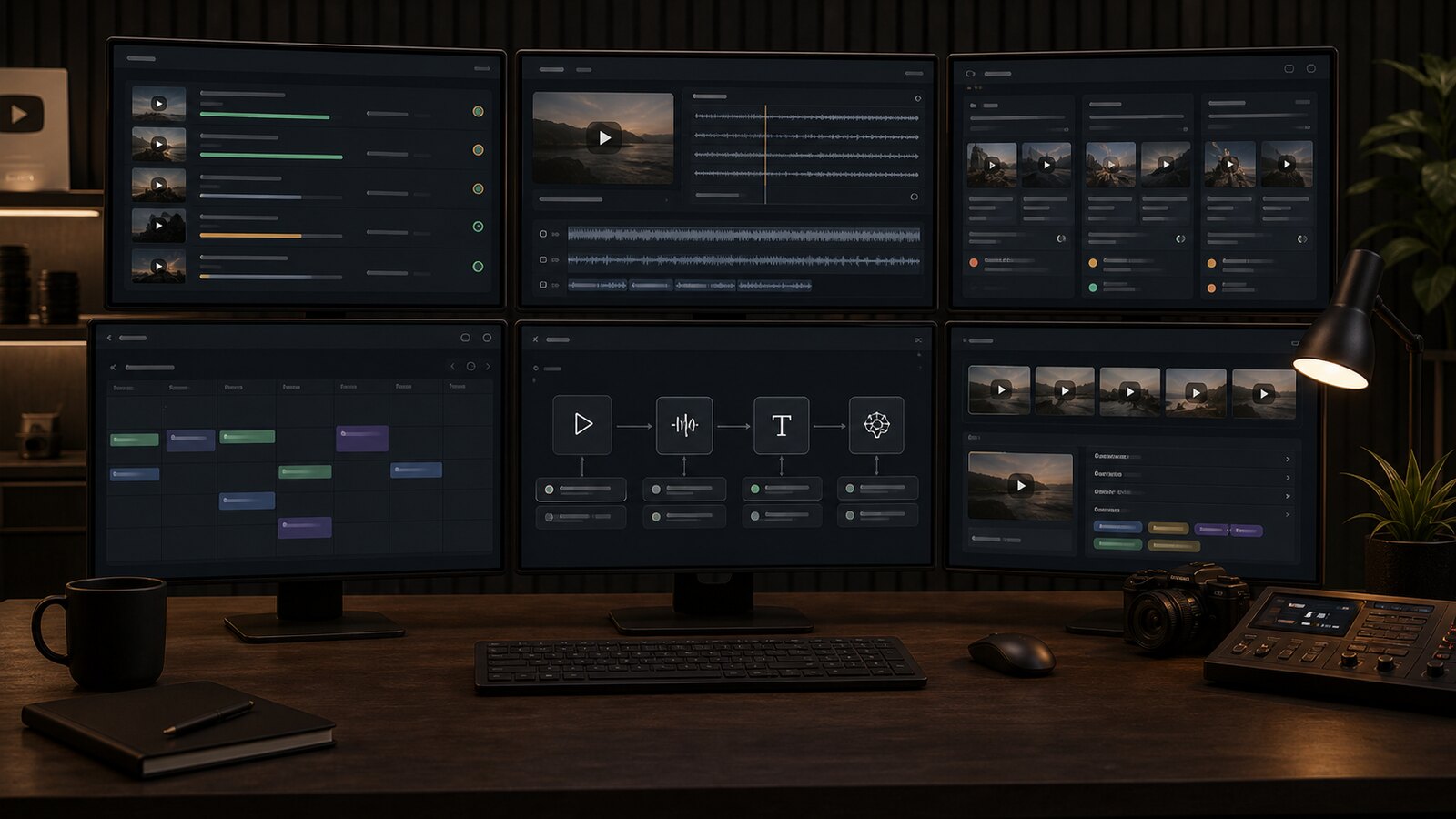
A practical console should centralize the pieces that matter operationally: YouTube API connection state, channel records, synced video metadata, transcript ingestion, reusable prompt templates, AI-generated drafts, and a review surface for what gets accepted or rejected. That turns the workflow into a visible pipeline instead of a mental checklist.
This is where a dedicated console changes the economics of channel work. The operator is no longer bouncing between YouTube Studio, transcript files, notes, and prompts. The workflow can be supervised as one system with one source of truth about what happened.
Why Transcript Sync Changes the Quality of the Metadata
Transcript sync is the difference between generic metadata assistance and informed metadata assistance. Once the system can access the transcript, prompt templates, and any stored channel rules, the generated title and description suggestions can be grounded in what the video actually says rather than in a guessed summary from memory.
That also improves review quality. The operator can compare the proposed metadata against a transcript-backed context instead of trusting a disconnected first draft that may sound polished but miss the point of the video.
Where the Operational Payoff Shows Up
The biggest gain is not raw generation speed. It is coherence. A channel manager can sync the latest videos, inspect transcripts, run prompt templates, review suggestions, and decide what to apply without opening five different tools. That shortens the path between content review and actual platform changes.
For a recurring channel operation, that coherence matters more than a one-time AI novelty demo. It is what lets metadata work become part of a durable system instead of an endless pile of small repetitive tasks.
The Decision Rule
If channel operations are recurring and AI-assisted, build a working surface for them. The assistant becomes much more valuable when it is embedded inside the real YouTube workflow instead of floating outside it as another disconnected prompt tool.