The Real Problem
Live Q&A usually breaks in a predictable way. A few people are comfortable speaking up. Some questions arrive too late. Other questions are useful but never surface because the facilitator has no way to see what the room actually wants answered.
A normal form can collect questions, but it does not solve the operating problem. The facilitator still has to sort, compare, skip duplicates, and decide what is worth using while the session is moving.
What GroupSift Needed To Do
GroupSift was built around that live operating moment. Participants need a fast entry point. The organizer needs a board they can create and manage. The facilitator needs ranked input, not a raw inbox. The system also needs to support anonymous participation without turning the board into an uncontrolled public feed.
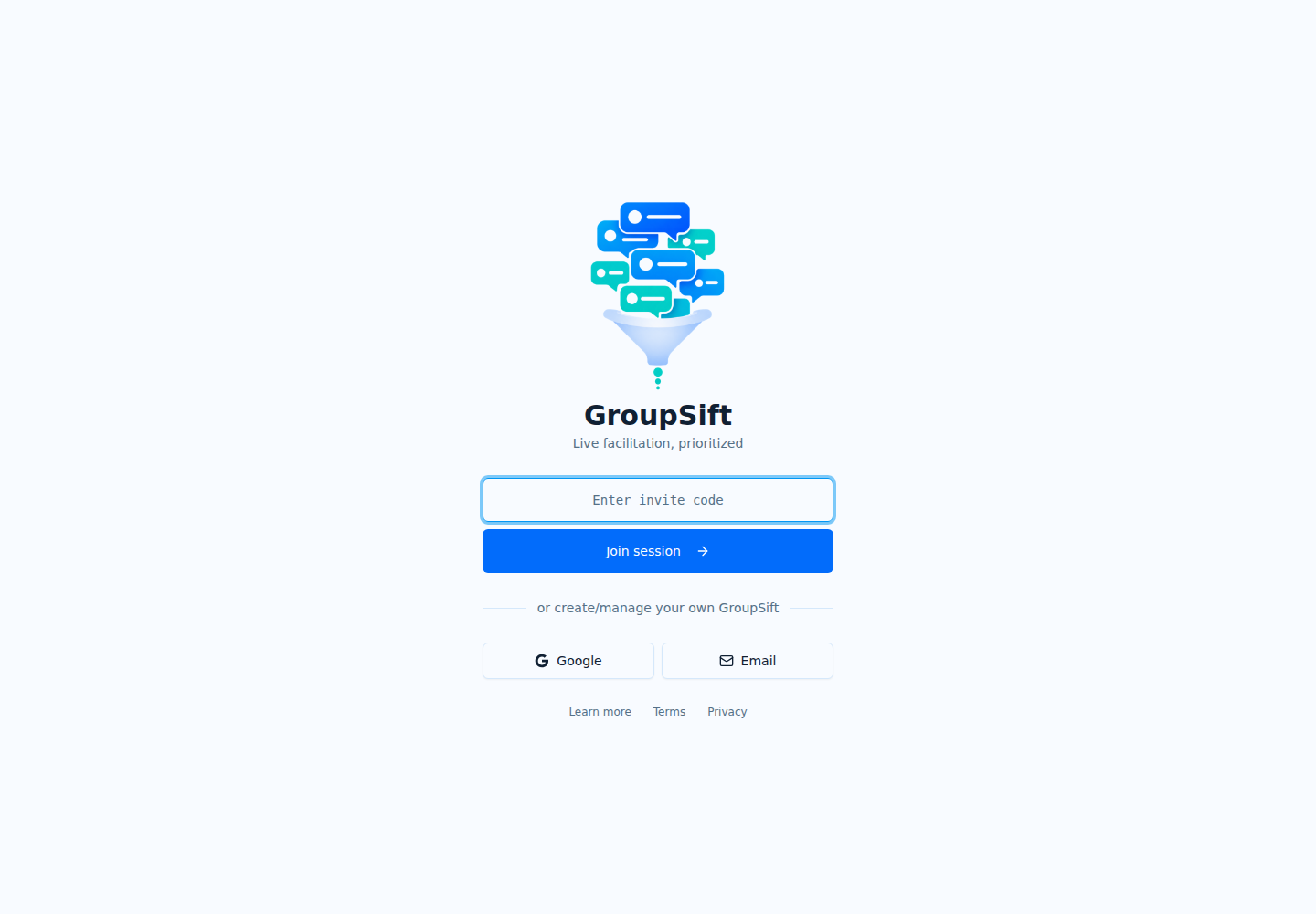
The result is a custom web app with board creation, QR and link invites, anonymous participant submission, vote-gated ranking, facilitator controls, recap views, and account-backed ownership for people managing boards.
Why A Form Was Not Enough
The difference is state. A form answers the question, “What did someone type?” GroupSift answers a more useful set of questions: which board is this for, who owns it, is the board open, what has been submitted, what has been voted up, and what does the facilitator need to see now?
That state model changes the workflow. It makes participation easier for the room and makes the moderation job less dependent on guesswork.
The Build Pattern
The practical pattern is a small hosted app, not a giant platform. Python and Flask handle the app behavior. The public participant flow stays focused. The facilitator and owner paths carry the controls. QR links keep the event flow simple enough that people can join without instructions.
This is the kind of app that works because it is narrow. It does not try to become a full event platform. It solves the signal problem around live group input.
Where This Applies
The same pattern fits churches, conferences, workshops, leadership offsites, planning sessions, trainings, and community events. Anywhere a group has more questions or ideas than can be handled cleanly by a microphone line, the workflow needs ranking and facilitation controls.
The important lesson is not the technology. It is that the app was designed around the point of pressure: the moment where a facilitator needs useful signal from the room.
The Decision Rule
If the work is only intake, a form may be enough. If the work needs ownership, anonymity, voting, board state, facilitation, and recap, the workflow has become an app. GroupSift was built for that second case.