
The Real Problem
A raffle is not just a sale. The payment side matters, but the public trust side matters just as much. People need to understand the rules, what their ticket means, how entries are counted, when the draw happens, and where results will be posted.
Shopify can handle the transaction well. It is not automatically the best place to explain and operate the raffle itself.
Why The Workflow Was Split
The better pattern was to keep Shopify as the source of truth for ticket purchases while building a separate raffle operations app beside it. That app can focus on the fundraiser-specific work: official rules, featured prize context, public status, entry visibility, winner posting, and draw workflow.
This avoids forcing the entire raffle into a product page. It also avoids rebuilding commerce when Shopify is already the right tool for payment and order handling.
What The App Adds
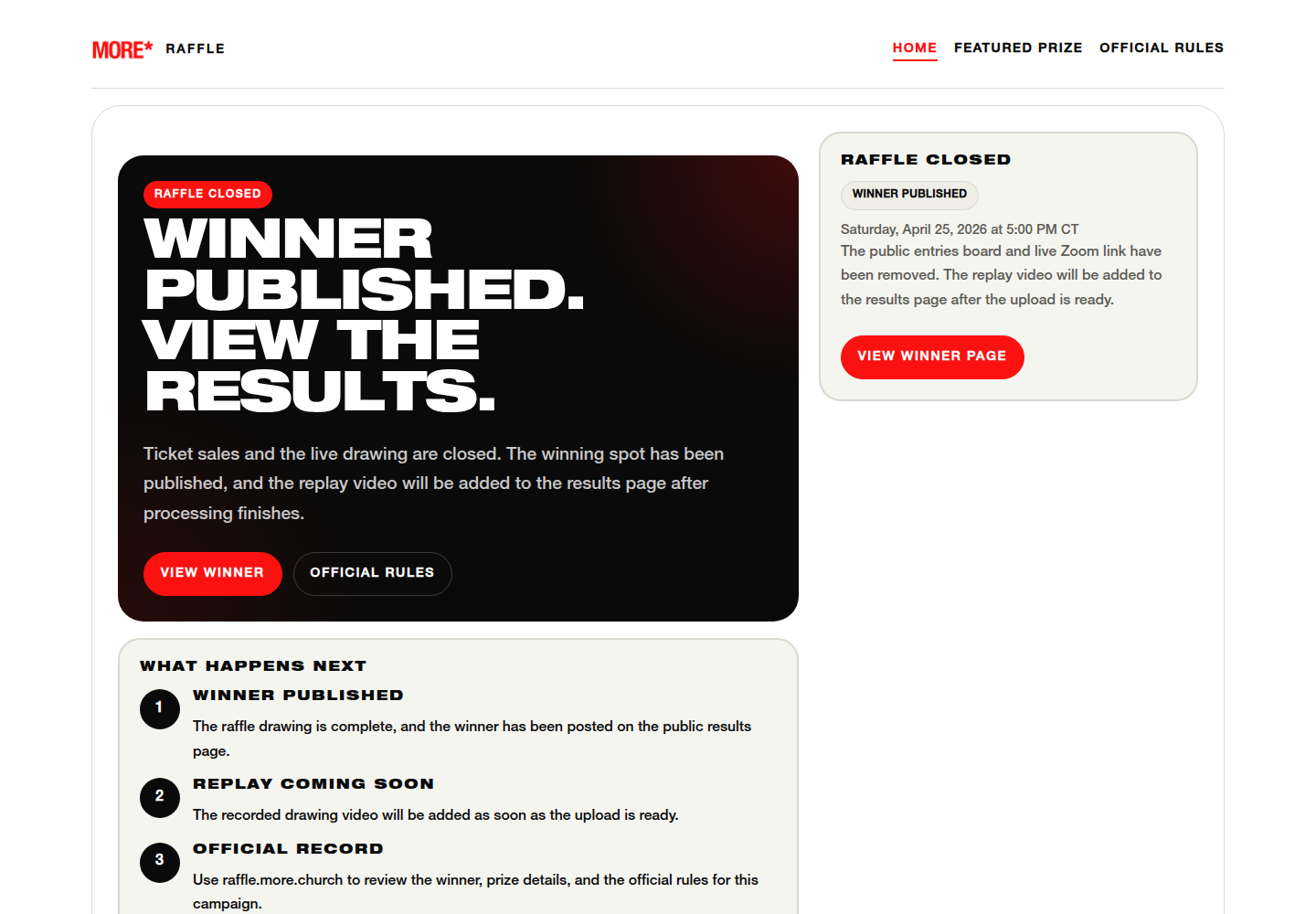
The raffle app gives the fundraiser a public surface that is built around trust. It can explain the process, show status, point people to the purchase path, and preserve a clearer record for the draw and results.
That separation matters because raffle operations are sensitive to confusion. If the public has to infer the rules from a checkout page, the system is too thin.
The Build Pattern
This is a good example of custom software supporting an existing platform instead of replacing it. Shopify stays in its lane. The custom app handles the domain-specific state around the fundraiser.
That is often the right move for small business and nonprofit workflows. The app does not need to become the entire business system. It needs to own the logic the current platform does not model clearly.
Where This Applies
The same approach can support raffles, campaigns, ticketed fundraisers, limited-seat events, member-only offers, public prize drawings, and other workflows where the transaction is only part of the operating obligation.
Public trust workflows need clear rules, visible state, and a record people can understand later. That is different from a normal ecommerce checkout.
The Decision Rule
If the platform can sell the thing but cannot clearly operate the promise around it, keep the platform and build the missing workflow beside it. That is what the raffle app does around Shopify.