The Event-Day Problem
A tournament can look simple from the outside. People register, show up, compete, and see results. The operating layer underneath is not simple. Registration data, shooter numbers, check-in packets, scoring, pool assignment, bracket state, and public visibility all have to line up.
That is where normal event tooling starts to show its limits. A registration form is useful, but it does not run the tournament. It only starts the workflow.
What The App Had To Carry
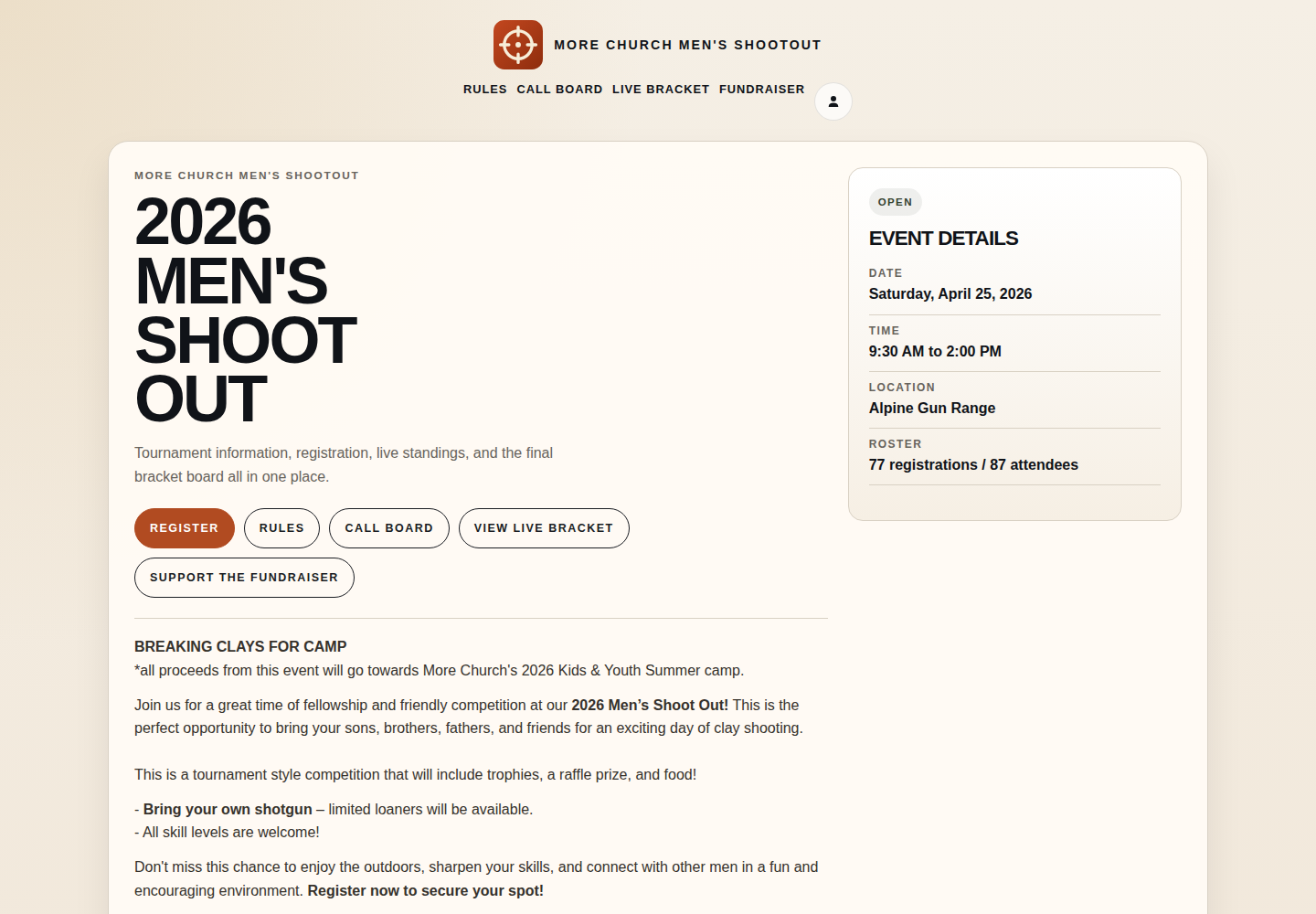
The Men's Shootout app was built as a standalone tournament operations surface. It supports the public event page, registration context, admin review, shooter pages, scoring views, RSO phone scoring, leaderboard and bracket screens, and event-day controls.
The key is that the app is not just a website. It is an operating system for the event. It gives staff and volunteers a shared place to see what is happening, enter scores, and keep the bracket path visible.
Why Forms Break Down
Forms do not model live state well. They can collect registration data, but they do not know whether a shooter checked in, whether a scorecard was entered, whether the bracket is ready, or whether the public call board should change.
Once those questions matter, the event needs more than intake. It needs a data model, roles, state transitions, and operator screens.
The Practical Build Pattern
This kind of app does not have to be overbuilt. The practical stack can be a small Python app running on normal hosting, with a database, admin routes, public screens, and enough QA/backup discipline to survive event pressure.
The important part is designing around the real day-of-event sequence. The app should make the highest-pressure moments easier: check-in, score entry, standings, bracket movement, and public status.
Where This Applies
The same pattern applies to fundraisers, tournaments, clinics, conferences, races, camps, and nonprofit events where registration is only the first step. If the event has scoring, assignments, packets, teams, eligibility, check-in, or public status, it probably has app logic hiding behind the form.
That does not mean every event needs a custom platform. It means the decision should be based on operational pressure, not on whether a form can technically collect the first piece of data.
The Decision Rule
If the hard part happens after the form is submitted, build for the operating moment. Men's Shootout is a good example: the value is not only registration. The value is that the event can be run from one purpose-built system.